Featured
Everything about Financial Trends and How More Families N...
Some Ideas on What Sets Quality Counselors Apart in the I...

The 2-Minute Rule for What Legislation Guarantees Under State Law
Table of Contents
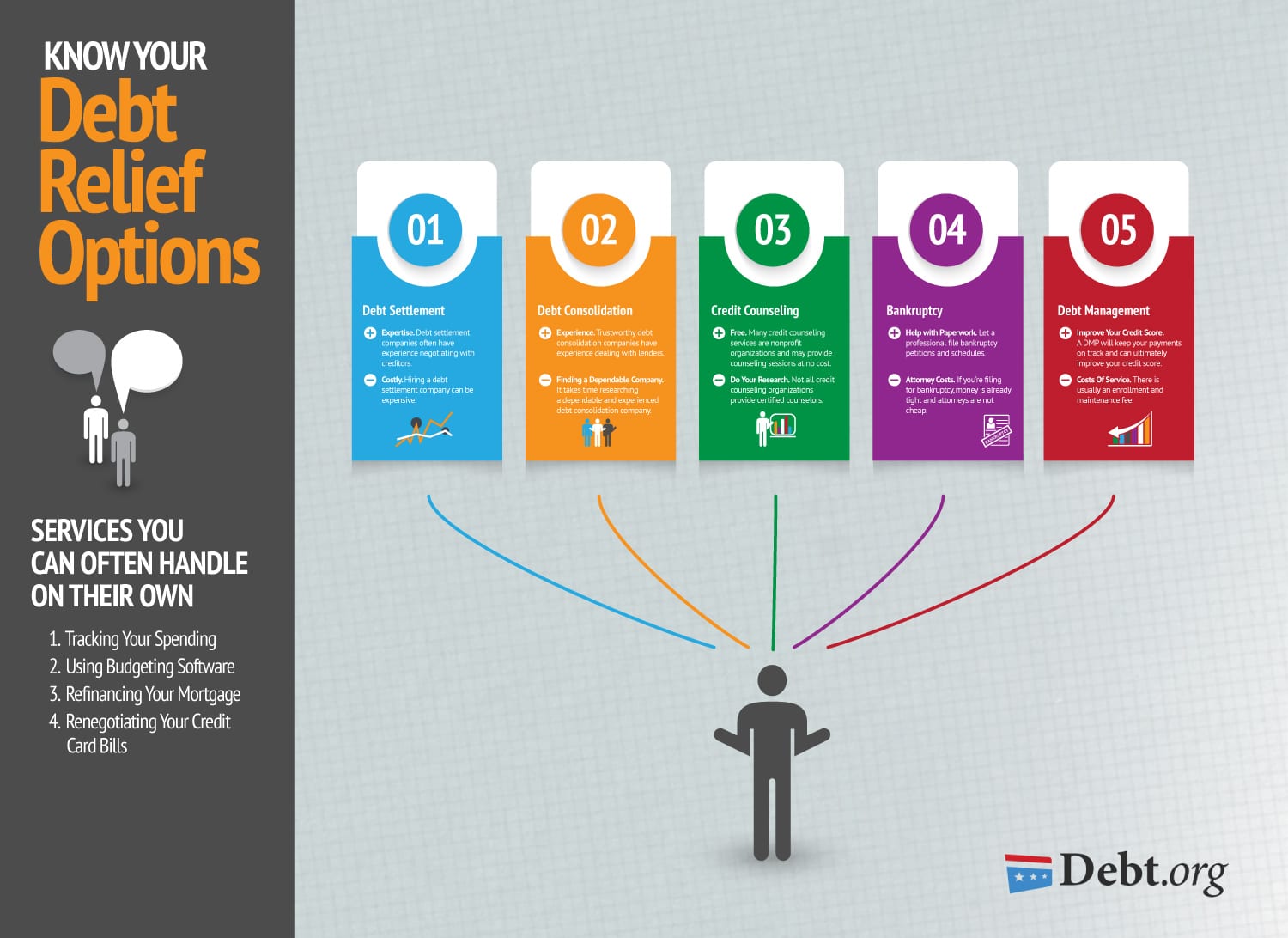
That releases up cash in the brief term, and you may have 3 to 4 years to conserve toward the settlement amount. Really damaging to credit report, primarily because of missed payments and a negative "cleared up" mark that might remain on your credit rating record for approximately 7 yearsMay be just choice if various other choices (debt consolidation, equilibrium transfer charge card, financial obligation mercy) aren't possibleTypically calls for a charge to the 3rd celebration, which might balance out some or every one of the financial savings from financial obligation settlementMay help you prevent personal bankruptcy if you've missed out on several paymentsNot all lenders work with financial debt negotiation companies Debt mercy might be right for you if you are experiencing a financial difficulty that makes it virtually impossible to pay down your financial obligation balances.
With a DMP, you make one month-to-month settlement to the credit score counseling firm. Those funds are after that distributed to financial institutions of your unprotected financial obligations, such as bank card and installment financings. The company works with your financial institutions to lower rate of interest prices or waive fees, yet some lenders might refuse such giving ins.
A debt combination finance combines your eligible financial debts into one new lending. It can help you pay down financial obligation if you're able to protect a loan rate that's reduced than the ordinary rate of the accounts you're combining. Nevertheless, you should abstain from racking up financial obligation on those newly gotten rid of accounts or your financial obligation could expand even higher.

That provides you lots of time to eliminate or dramatically minimize your balance while making interest-free repayments.
Excitement About Comparing Debt Relief Companies to Choose the Right Partner
You might need it if your financial institution or a collection firm ever tries to gather on the financial obligation in the future. When a lender forgives $600 or more, they are needed to send you Type 1099-C.
Financial debt mercy or negotiation often injures your credit scores. Anytime you work out a debt for less than you owe, it may look like "cleared up" on your credit history record and impact your credit history for 7 years from the day of negotiation. Your credit rating can likewise go down substantially in the months resulting in the forgiveness if you drop behind on repayments.
4 Easy Facts About How to Not Repeat Additional Debt Cycles After How Housing Counselors Work with Legal Aid When You’re at Risk of Eviction Described
This scenario typically results from underreporting earnings, not filing returns on time, or inconsistencies found throughout an IRS audit. The consequences of collecting tax financial obligation are severe and can consist of tax obligation liens, which provide the Internal revenue service a lawful case to your residential property as protection for the financial obligation.
Higher passion prices on available debt. Salaries and Bank Accounts internal revenue service can impose (seize) earnings and checking account to please the debt. Minimized income and disturbance of necessary financial processes. Building Seizure In extreme instances, the IRS can take and market residential property to cover the financial debt. Loss of important assets and possible variation.
Social Stigma Encountering legal action from the Internal revenue service can bring social preconception. Work Opportunities An inadequate credit rating due to exhaust debt can restrict employment chances. Government Advantages Tax financial obligation may influence eligibility for federal government benefits, such as Social Safety And Security and Medicaid.
Our How to Contact How Housing Counselors Work with Legal Aid When You’re at Risk of Eviction Experts with the Financial Recovery Journey Ideas
The OIC considers a number of elements, including the taxpayer's earnings, costs, possession equity, and ability to pay. Efficiently negotiating an OIC can be complicated, calling for a complete understanding of the IRS's standards and a solid argument for why your offer aligns with your capacity to pay. It's vital to keep in mind that not all applications are approved, and the process calls for thorough monetary disclosure.
The IRS examines your total financial situation, including your income, expenditures, possession equity, and capacity to pay. You need to additionally be current with all filing and repayment needs and not remain in an open personal bankruptcy proceeding. The internal revenue service additionally considers your compliance background, assessing whether you have a record of prompt declaring and paying taxes in previous years.
Free Informational Financial Literacy Resources for Individuals Things To Know Before You Get This
The application procedure for a Deal in Compromise includes several thorough actions. Initially, you have to finish and submit internal revenue service Kind 656, the Deal in Concession application, and Form 433-A (OIC), a collection details statement for people. These forms call for thorough economic info, including information regarding your revenue, financial obligations, expenditures, and possessions.
Back taxes, which are unsettled taxes from previous years, can substantially enhance your total IRS debt if not attended to immediately. This debt can accrue passion and late settlement fines, making the original amount owed much bigger over time. Failing to repay taxes can lead to the internal revenue service taking enforcement activities, such as releasing a tax lien or levy against your home.
It is very important to address back tax obligations as soon as feasible, either by paying the total owed or by preparing a layaway plan with the internal revenue service. By taking positive actions, you can avoid the accumulation of additional passion and fines, and avoid more hostile collection actions by the internal revenue service.
One common reason is the idea that the taxpayer can pay the sum total either as a round figure or via a layaway plan. The internal revenue service also takes into consideration the taxpayer's income, expenditures, possession equity, and future earning capacity. If these variables show that the taxpayer can afford to pay greater than the used amount, the internal revenue service is most likely to decline the offer.
Widespread Misconceptions Surrounding Bankruptcy Can Be Fun For Anyone
It is crucial to supply accurate and complete information in your application and to seek advice from with a tax expert to enhance the possibilities of approval. Handling internal revenue service financial obligation can be intricate and difficult. Tax experts, such as CPAs, tax obligation lawyers, or registered agents, can offer invaluable support. They have the knowledge to navigate the ins and outs of tax obligation regulation and internal revenue service procedures.

Table of Contents
Latest Posts

Everything about Financial Trends and How More Families Need Are Seeking Debt Forgiveness

Initial Assessment with APFSC Can Be Fun For Anyone

Some Ideas on What Sets Quality Counselors Apart in the Industry You Should Know
More
Latest Posts
Everything about Financial Trends and How More Families Need Are Seeking Debt Forgiveness
Initial Assessment with APFSC Can Be Fun For Anyone
Some Ideas on What Sets Quality Counselors Apart in the Industry You Should Know